Tried and New
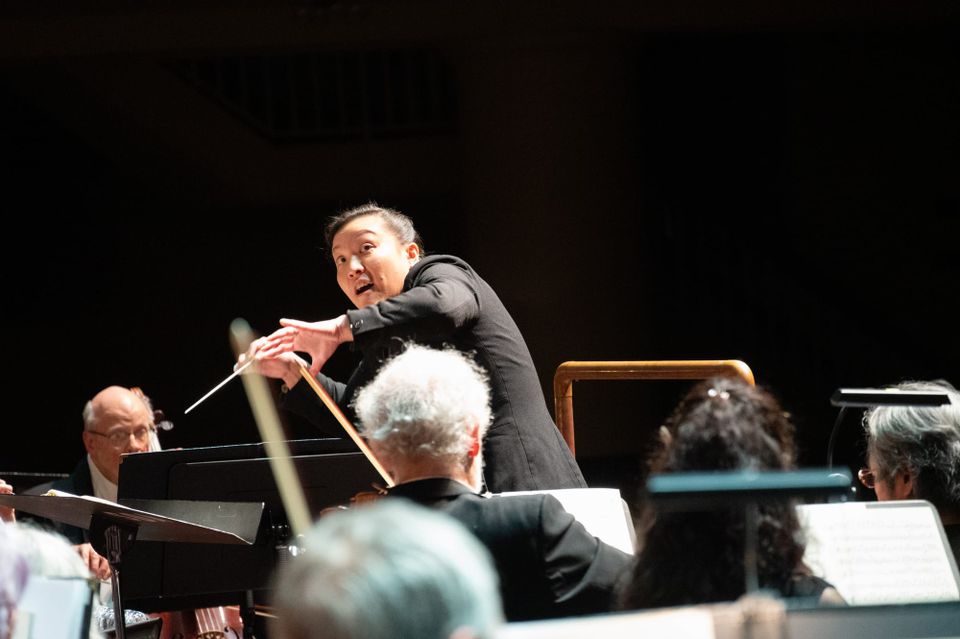
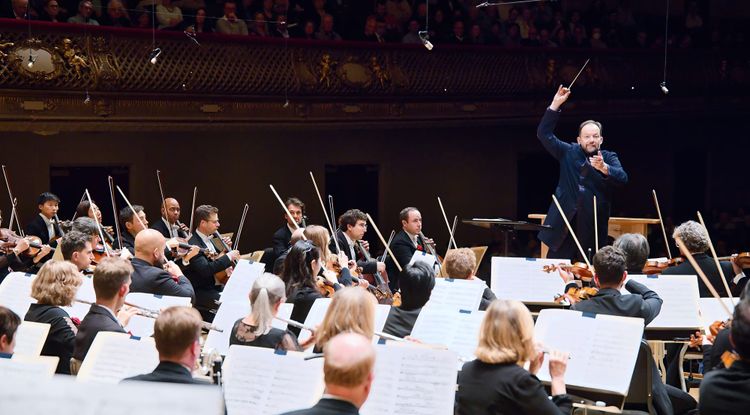
The hoary formula for programming an orchestral concert — overture, concerto, intermission, symphony — is easy to knock, but there’s a reason it’s a classic. Pick the right repertoire and play it well, and the framework provides a satisfying combination of the compact and the expansive, the individualistic and the collective. As familiar as it is, the Springfield Symphony Orchestra proved it still has the capacity to surprise with their season-opening concert on October 24th.
The evening opened with a burnished account of Louise Farrenc’s overture in E minor, Op 23 (1834). It’s a politely stormy work, hewing close to traditional forms even as it anticipates the explosive personal expressiveness that would come to dominate classical music later in the nineteenth century. Despite being well regarded in her day — she was the only woman to hold the position of piano professor at the Paris Conservatory in the 1800s — Farrenc faced stiff uphill battles against sexism, being denied the right to participate in public composition seminars and fighting for a decade to achieve equal pay with her male colleagues. In her remarks from the podium, conductor Deanna Tham suggested that Farrenc felt pressured to write in a more conservative idiom than she would otherwise have chosen, and it wasn’t hard to feel this tension in the performance Tham led — a keen mind straining to break free from suffocating constraints.
That kind of freedom took pride of place in Andrés Martín’s “Morgante” violin concerto (2023), named after and dedicated to the memory of the trailblazing Black gay conductor Michael Morgan. Samuel Vargas took on the solo part, delivering its extended melodies and bristling passagework with sinuous beauty, although there were a few climactic passages where the orchestra swallowed his sound. The concerto itself is substantial, wending from an austere opening where the solo line emerges imperceptibly from ambiguous, misty orchestral chords to a propulsive finale. That finale may be a tad over-stuffed — to my ear, it has one too many cadenzas and a structurally awkward coda — but the use of ghostly tango rhythms is masterful throughout, including a deliriously disorienting deployment at the second movement’s sorrowful climax. The encore — a world premiere performance of Martín’s sweet, folksy “Riding in Heaven”, written just for this occasion — was well earned.
Johannes Brahms’s fourth symphony (1884) closed the evening. Brahms’s music can often turn soupy, but Tham kept things taut, peeling away the late-Romantic haze to lead a craggy performance. The orchestra responded marvelously, turning in a sharp-edged rendition of the first movement’s gnashing triplets and a riotous stampede in the exuberant scherzo. Even the introspective second movement looked forward to future musics, with an emphasis on the pungent harmonies that the exposed woodwinds play there.
The Springfield Symphony are currently in a search for their next Music Director, and Tham is the first of several finalists who will visit to lead concerts this year. If they all perform at this high level, the group will be spoiled for choice indeed.
In Anticipation
Bounce around to enough new music concerts, and you’ll soon start to recognize a rotating cast of familiar faces. In a given area, there are only ever so many people who are up for schlepping out to an out-of-the-way hole in the wall to hear an ad-hoc ensemble play music of unknown quality by unknown writers, and after a while, you get to recognize them. Sometimes, you even become their friend.
In truth, I can’t remember where inti figgis-vizueta and I first crossed paths — perhaps at a twenty-seat room behind a long-shuttered micro art gallery in Brooklyn to hear a Jazz duo tearing through Anthony Braxton, perhaps waiting for the onslaught of a harsh noise show at Roulette, perhaps somewhere much more forgettable. However it happened, her keenly enthusiastic countenance soon became a staple of my concert-going life, and I have many fond memories of debriefing with her while waiting for our separate trains home.
Even then, her compositional star was in ascent, a trajectory that has only accelerated of late, with recent amply earned plaudits in such outlets as Gramophone and The New York Times. Now, she has a solo album coming out on Friday, Music for Transitions, a generous, intimate unfolding of a relentlessly inquisitive musical voice.
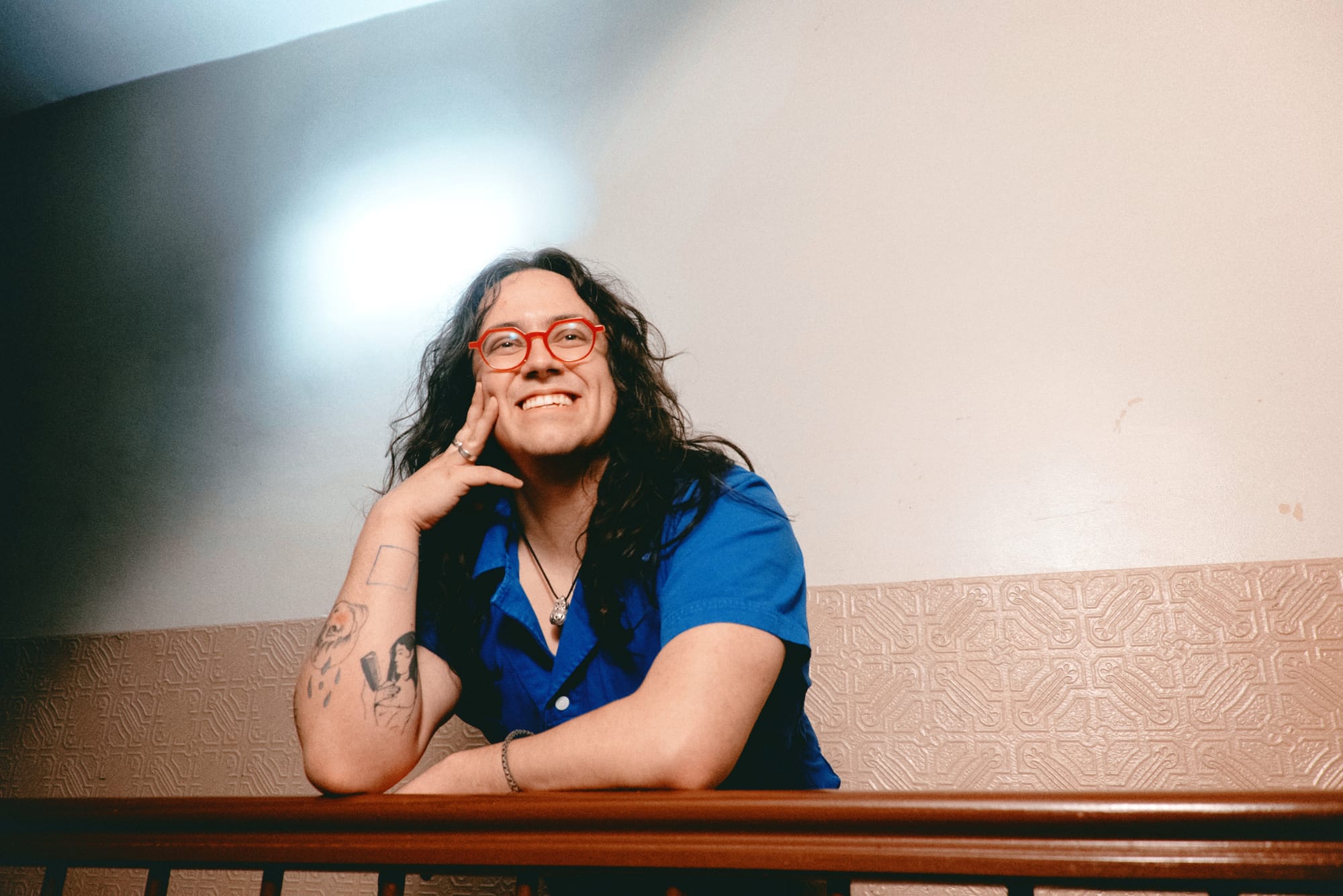
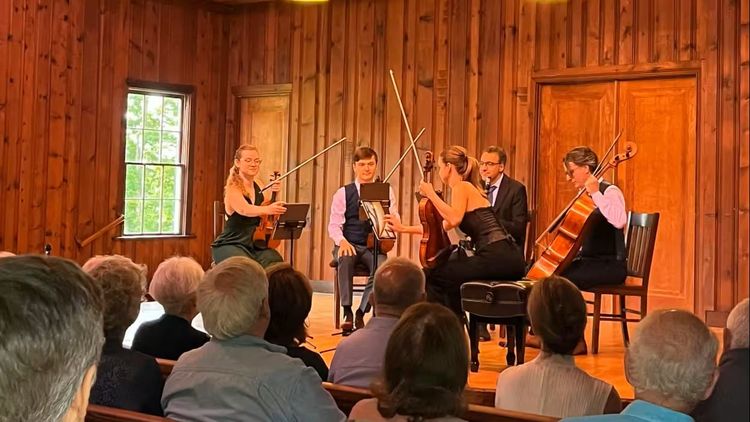
The album features the Rothko String Quartet alongside cellist and composer Andrew Yee[1]. All are long-time collaborators with figgis-vizueta, and their deep musical bonds profoundly shape the music on offer. Many of figgis-vizueta’s scores feature improvisation and player choice as core structural elements, making each new performance an act of co-creation. There’s an element of recursion here: Yee and the Rothko quartet animate their own versions of works written for them to put their own stamp on based in part on how they’ve handled previous works by the same composer. The patient trust that results moves these recordings from the realm of cleanly delineated handoffs to organic outgrowths of a community of intertwined artistic lives.
What emerges from this attentive portrait? There are, of course, the surface materials of figgis-vizueta’s compositional voice — despite an aching low melody in the title track and an ethereal chorale in Talamh (Land), musically these works more typically comprise shimmering arpeggios of varying speed and density — but there’s a deeper unity working behind the scenes. figgis-vizueta’s work is unabashedly political, and the topics covered can be heavy, from the violent dispossession of colonialism to the fragility of trans joy amidst rampant fascism. But hers is not a musical politic that re-transmits that violence to the listener, even to condemn it. Instead, these works carve out space for quietude, room to feel deeply, time to fully mourn what has been lost and love what yet remains.
The name of the Rothko quartet is perhaps coincidental, but I can’t help feel a resonance between Transitions and that painter’s late works. Form and figure fall away, leaving only shape, mass, color. But even those abstract blocks have a depth and gravitational pull that cannot be simplified to mere hue. Yee and the quartet lean into a scratchy sound here that pares away the notes’ lower frequencies to expose the brilliant constellations of the upper partials, whirlygigging around on the cusp of hearing, buried inaudible in more regular timbres. As the players quiver in rapture, it is as though they are trying to climb up into the sound itself, leading the way for us all to follow up, up, out of the sorrowful mire and through the whistling air to splash ecstatic among the dazzling stars.
Another collegial friend of mine, who I’ve profiled on several occasions, especially around her co-founding of the essential ChamberQUEER. ↩︎
In Brief
Now that the semester is back in full swing, the local classical music station is once again splitting airtime with student DJs and their more eclectic musical tastes. So when I heard an announcement on a recent commute that they’d next be playing a work by Clarice Assad, I assumed I had misheard the name of a Zoomer act not on my radar. But no! They put on the exuberantly bizarre “Jester” movement from her Archetypes suite, which sounds a little bit like a sentient kazoo re-inventing rap from first principles. (That link will take you to the studio recording they played; there’s also a live video version featuring the composer herself that has tremendous playful character.) G-d bless the youths — stay weird, kids!
In My Calendar
As ever, these listings aren’t comprehensive, they’re just the ones that happen to have caught my eye and that I have particular interest in. If you’re a local artist, publicist, or presenting institution, please add me to your mailing list so I can keep up to date on what you have going on!
Events marked with a Ø are free and open to the public.
- Ø Nov 2, 7:30pm: UMass’s Bandwidth faculty ensemble presents an evening of mixed chamber music that includes an offering from the astringent Marcos Balter along with Leoš Janáček’s beguiling Mládí. (As ever, I’m employed by UMass for my day job, albeit not in any capacity related to the Music Department or their public offerings.)
- Ø Nov 2, 7:30pm: Elsewhere in the state, Williams College hosts the Collage New Music ensemble that includes the second-ever performance of a work by one of their faculty members, Ileana Perez Velázquez. There’s plenty of other great stuff on the program, and you sure can’t beat the price!
- Nov 3, 10:30am: Down in Springfield, the Tuesday Morning Music Club continues their concert series with a set of works for flute quartet and string trio. The website doesn’t list the repertoire, but it’s a pleasant instrumental combination at the very least.
- Nov 5–8, various times: I can’t pretend to be a disinterested party — my husband and I are both in the show, my mom’s doing costumes for it, and my father and cousin have both at various times been on the organization’s board — but this weekend, Valley Light Opera presents Fiddler on the Roof at Northampton’s Academy of Music. Come see me pretend to read a Yiddish newspaper upside-down!
- Ø Nov 6, 7:30pm: There’s another chance to hear music by Williams’s Perez Velázquez when the Berkshire Symphony performs the world premiere of her new Dreamers. Beethoven’s fifth symphony rounds out the program, so there’ll be something familiar on it, too.
- Nov 7, 7:00pm: Up in Brattleboro, the Educate Open Strengthen Project presents a celebration of local female composers in an event that promises to be as easygoing about genre as it is specifically tied to its particular place. Get out there and listen local!
- Nov 8, 2:00pm: Across another border, in Connecticut, the Wadsworth Atheneum hosts performers from the Hartford Symphony Orchestra in a bill of music loosely centered around the concept of Italy. The Schumann might be pushing that definition a little far, but how often do you get to hear anything by Dallapiccola live these days?
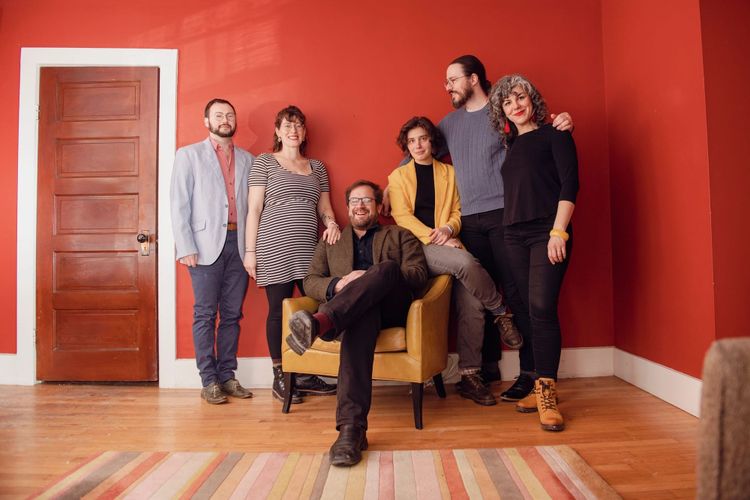
- Nov 13, 7:00pm: Back up north, the BMC hosts another gleefully genre-agnostic evening, this time of decidedly un-local works: The Sarasa Ensemble takes a detour to Norway starting in the Baroque era and winding up with something from ABBA.
- Nov 14, 3:00pm: The next afternoon, two of UMass’s choral ensembles join forces for a bill of largely contemporary fare. Contemporary choral music often follows somewhat different courses than instrumental offerings, and this seems like it should be a lovely chance to sample some of those streams.
- Nov 14, 7:30pm: That same evening, the Dover Quartet comes to Amherst College with a program that includes a work by the inimitable Jerod Impichchaachaaha’ Tate. Their last chamber concert sold out fast, so don’t wait if you want to go to this one!
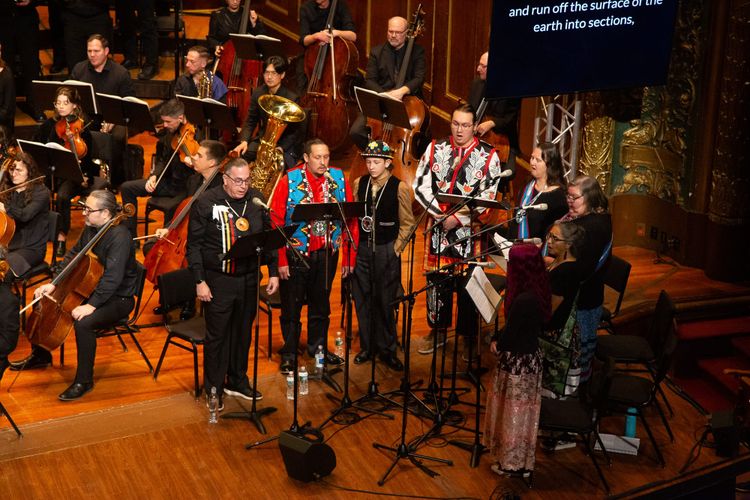
- Nov 14, 7:30pm: Boston continues to be a little further east than I want to regularly advertise, but it’s not every day that there’s a world premiere of a major requiem by Indigenous composer Brent Michael Davids. From the description, it sounds like it will be an intense, powerful evening.
- Nov 15, 3:00pm: At the other end of the state, the Imani Winds come to Tanglewood for an off-season performance of wind quintet music. No program listed, but they’re reliable champions of the new, and also great fun to watch in concert, in my experience.
Member discussion