Sound and Fury
In Review: Bernstein, Price, Saint-Saëns, and Dvořák at Tanglewood
The twentieth-century concerto is an odd beast. The Romantic ideal of the unconstrained Hero made the concerto a natural outlet for works presenting the soloist-as-individual against the orchestra-as-society, but after the upheavals of the World Wars, that setup was no longer of the zeitgeist, and composers turned to other models for their virtuosic showpieces.
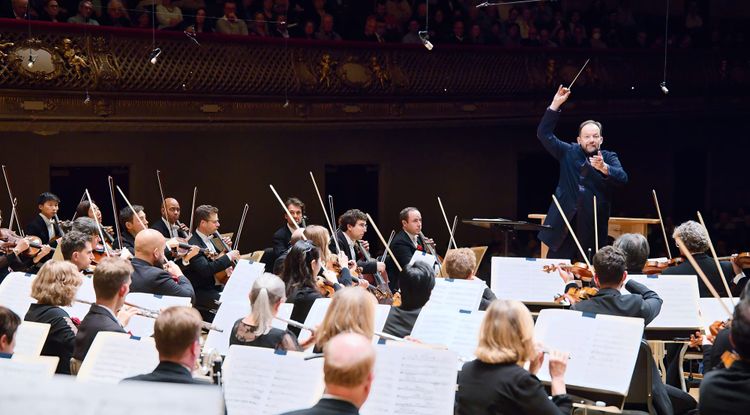
One such model was on display this past Saturday at Tanglewood, where the charismatic violinist Randall Goosby gave the BSO premiere of Florence Price’s second violin concerto (1952) under the baton of guest conductor Thomas Wilkins. The concerto is an easygoing work, full of lilting themes and lyrical plateaus, the solo part gilding the unfolding textures like sunlight on the edges of leaves on an endless summer afternoon: not an antagonist or ringleader but an illuminator.
In his program notes, musicologist Douglas W Shadle suggests Price might have revised the work if not for her sudden death in 1953, and it’s not hard to see why: There are passages where the material feels underdeveloped or over-repeated. The same can’t be said for Saint-Saëns’s tight-yet-shallow introduction and rondo capriccioso (1863), a flashy showpiece from the composer’s youth. It’s a dippy work, but it takes well to a certain winking tongue-in-cheekiness; Wilkins led a simple, earnest rendition of it, however, and I’m not sure I’m capable of taking it that unironically. Even so, Goosby displayed a wealth of musicality in both works, ranging from warm melodic gestures to spitfire leaps and runs.
The plainspoken earnestness Wilkins cultivated suited Dvořák’s eighth symphony (1889) much better. Overshadowed by his inescapable ninth, the eighth is an amiable creation full of singing lines that unspool with almost improvisatory freedom. The BSO’s celli shone with burnished ardor in the opening measures; principle flutist Lorna McGhee carried off several daunting solos with effortless virtuosity. The waltzing third movement — as elegant a thing as Dvořák ever wrote, at least until its bombastic coda — floated with winsome refinement. Even the horns in the stampeding final moments stayed on the graceful side of rambunctious.
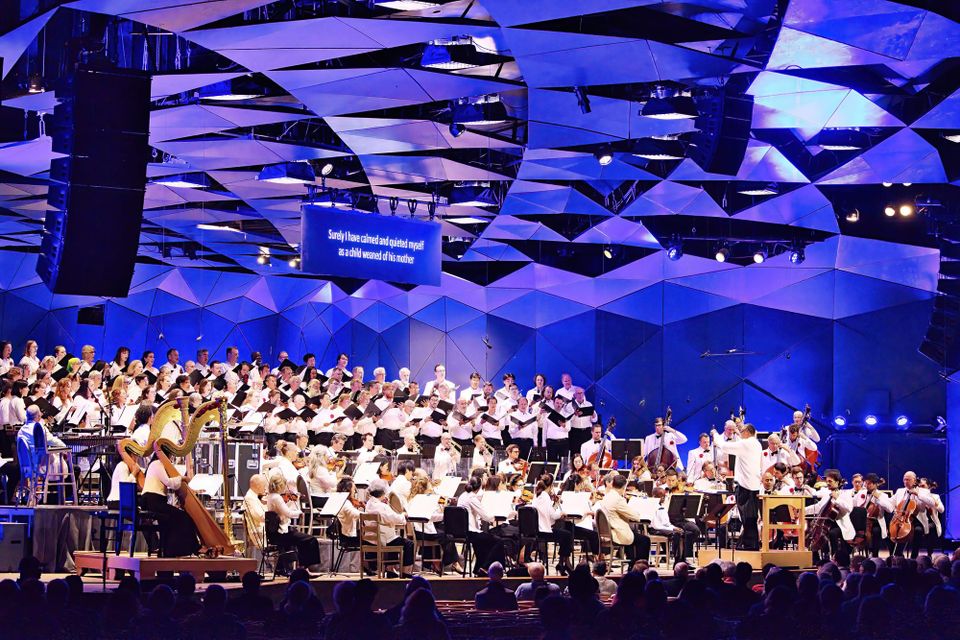
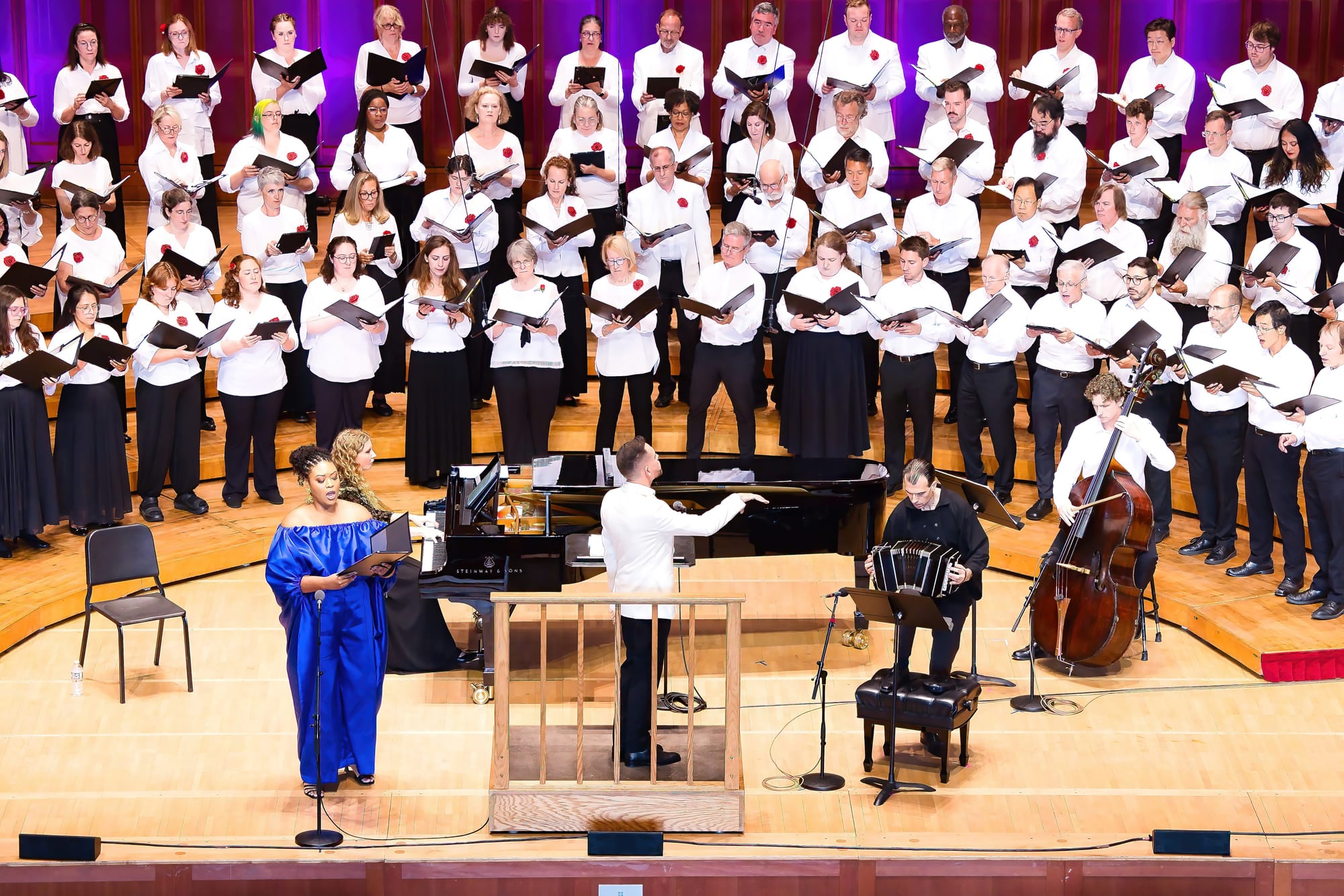
The concert opened with an oddly perfunctory rendition of Bernstein’s Chichester Psalms (1965), with the BSO joined by the Tanglewood Festival Chorus. (The Chorus also sang in the prelude performance of Martín Palmeri’s Misa a Buenos Aires (1996), an energetic if slightly monotonous tango-inflected setting of the Mass Ordinary that also featured mezzo-soprano Zoie Reams, though the solo moments allotted to her mellifluous voice were frustratingly short.) Even knowing Chichester’s Hebrew text well, I struggled to make out many words, and when the calm setting of the twenty-third psalm is rent asunder by psalm 2’s scurrying interjection, the chorus and orchestra slipped out of rhythmic alignment.
Perhaps the let’s-just-get-through-it energy reflected a degree of ambivalence towards the work’s underlying ideas. Those scurrying lines of the second psalm begin with a rhetorical question: לָ֭מָּה רָגְשׂ֣וּ גוֹיִ֑ם וּ֝לְאֻמִ֗ים יֶהְגּו־רִֽיק׃ | Lámah ragəshu goyim ul’umim yehgu riq. | “Why do nations rave and peoples plot emptily?” In context, it’s clear that this means other nations and other peoples; the psalm’s speaker is the one plotted against. But in a moment where the mad tyrant we elected is lashing out at our closest allies while sending armed white supremacist thugs to disappear our neighbors to torment and death, that’s a hard reading to sustain. We’re the ones raving and plotting futility — the chaos is coming from inside the House.
In Review: Righteous Rage
A surprising discovery: It turns out the bassoon is actually a percussion instrument.
That’s the impression you could get, at least, from the opening volleys of Rebekah Heller’s new album, Righteous Rage. Comprising five works for multi-track solo bassoon, the release is a bravura showcase of Heller’s status as an indefatigable champion of the new.
Most solo bassoon albums take a potpourri approach to the repertoire. Usually there are one or two obvious anchor works — a major sonata, or a hefty concerto by a big-name composer, say — and then a smattering of other offerings to round out the run time. Sometimes there’s a vague theme — works by French composers, or pieces that emphasize lyrical melodies — but even then, you can usually rearrange the works with little noticeable difference in overall musical effect. Not so Righteous Rage, which is an album in the truest sense: a set of works brought together in a careful, thought-out order that build to something greater than the sum of their parts.
So Heller opens with her own arrangement of The Holy Presence of Joan d’Arc, Julius Eastman’s hard-driving, mystical meditation on obsessive fervor. Nominally scored for ten bassoons, Heller here plays all the parts, layering herself over herself again and again into a churning of mass of sound overlaid by wailing cries. Grand Street Counterpoint, an arrangement of Steve Reich’s Cello Counterpoint, keeps the propulsive churn, but loses the ecstasy: Everything here is sleek, mechanical, coolly reserved.
By the time we get to Jessie Cox’s Sonic Cartographies, the first of three works commissioned specifically for this project, the machine has started breaking down; the music splutters and breaks apart into tumultuous fragments, shrapnel ricocheting around before dissipating into key clicks, reed gurgles, and squawks. This propulsion decay leads us, in turn, into Fay Victor’s Nurture (for Ingram), an elegiac tribute to jazz musician Ingram Washington. In the wake of the ever-slowing clicking that ends Cox’s piece (followed by one last high exclamation), Nurture opens in oceanic stillness, blankets of hazy chords lingering like heavy banks of fog. A mournful melody emerges, and leads gradually to a state of considerable agitation before things subside back into the numbing mist.
This leaves the title track, Brittany J Green’s Righteous Rage. After Nurture’s still plateau, we’re back to relentless forward motion, with little motivic gestures and strategically placed multiphonic rattles tying together much of the other music on the album as it builds towards its final cacophonous honk.
The works on this album will likely receive future performances, at double reed days if nowhere else, where each part is played live by a different bassoonist. That will doubtless ease production — recording over yourself a dozen times without losing the balance and clarity of the layers is beastly difficult — but it may also strip out the concentrated fury that comes from the inherent claustrophobia of one bassoon making all this noise. Heller’s is a distinctive sound — robust and bright, resonant without getting broad — and hearing ten copies of her all at once parallels the splintered experience of the present moment, where groceries and laundry somehow have to be handled even as each day brings new outrages and the surreality of the political scene makes it hard to securely tell fact from fiction. Who among us hasn’t felt split into pieces, furious, writhing, lost in an ocean of sorrow?
In My Calendar
As ever, these listings aren’t comprehensive, they’re just the ones that happen to have caught my eye. If you’re a local artist, publicist, or presenting institution, please add me to your mailing list so I can keep up to date on what you have going on!
Events marked with a Ø are free and open to the public.
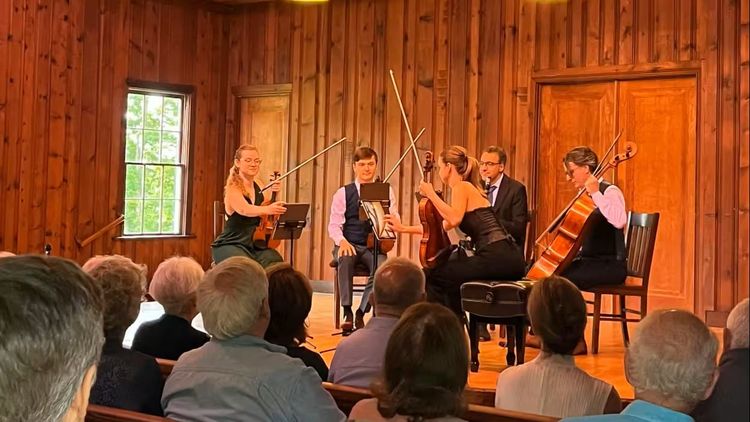
- August 30, 3:00pm: Music Mountain concludes their clarinet quintet series with the world premiere of a new work by Javier Montiel alongside a work by Florence Price and two warhorses by Mozart and Weber. I’ve been uniformly impressed by everything I’ve heard at Music Mountain this summer, so I have no doubt this will maintain that high standard.
- September 5, 7:00pm: Back at Music Mountain, the Borromeo Quartet presents a concert of mostly duets including some rarities by Kodály and Habibi. Even when there are four people on stage, things are a little topsy turvy: Arensky’s a minor string quartet features two cellos and only one violin!
- September 6, 3:00pm: And then again at Music Mountain (truly doing yeoman’s work bridging the end of summer festival season with the start of the fall concert season), the Penderecki Quartet performs the fourth quartet by their namesake alongside works by Beethoven and Dvořák.
- Ø September 6, 7:30pm: Closer to home, the Easthampton-based Play Incubation Collective presents a reading of Wynn MacKenzie’s Voyage of the August. From the sounds of it, this show is still in the early phases of its development, so this is a chance to get in on the ground floor and really see how a new work comes to be. (Full disclosure: My cousin Ezekiel Baskin is one of PIC’s artistic advisors.)
Member discussion