The Big Tapestry
In Review: Tanglewood’s Festival of Contemporary Music
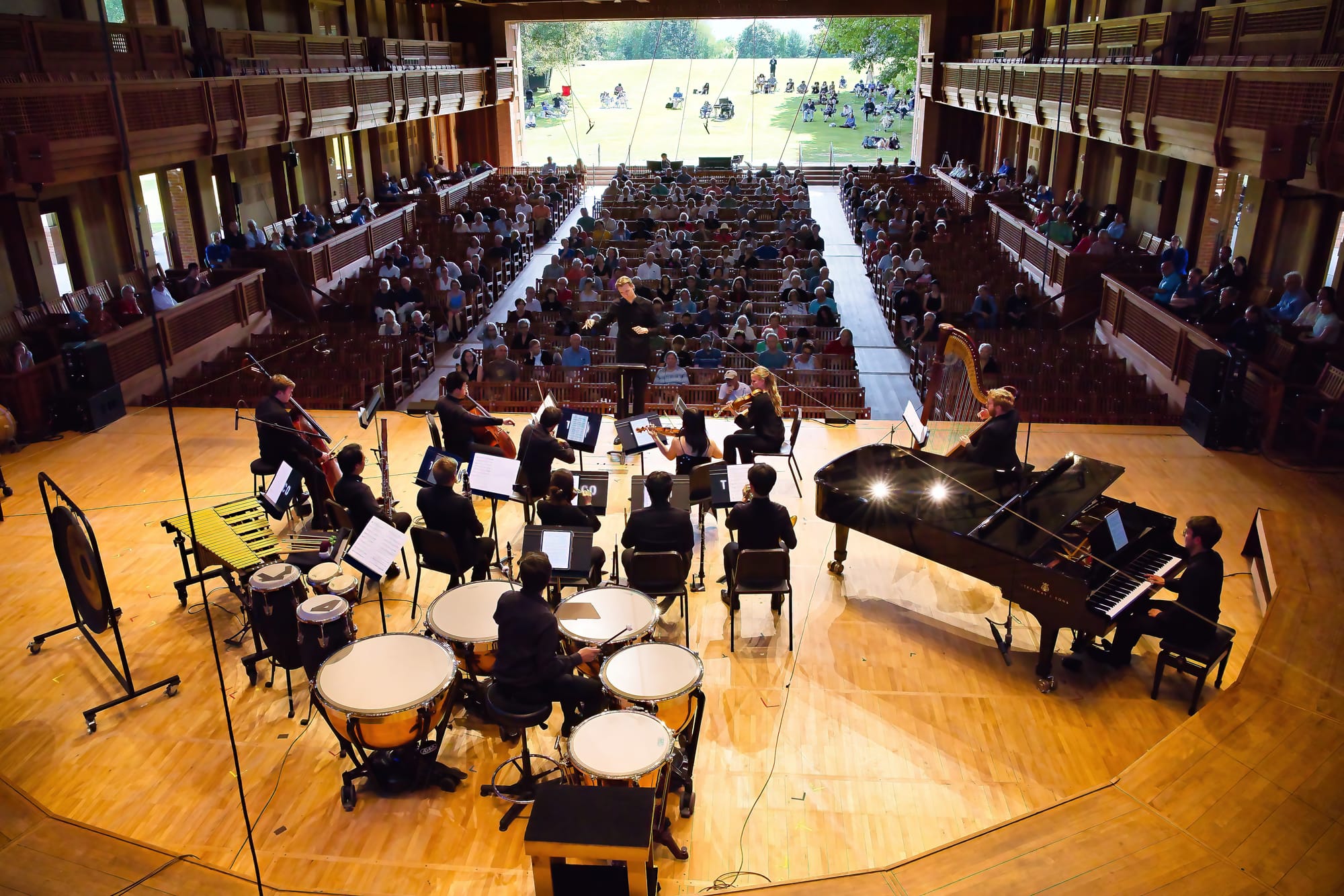
There was a time when I would have called Tanglewood’s Sunday morning concerts the best-kept secret of contemporary chamber music. I have many youthful memories of slipping away from a nearby summer camp to hear a dizzying array of new works that radically challenged my understanding of what classical music could be. In vain did I exhort my campmates to come with me (though, to be fair, it’s hard to get most teenagers to do anything before noon on a Sunday), and often there were barely more attendees scattered around the hall than there were performers gathered together on stage.
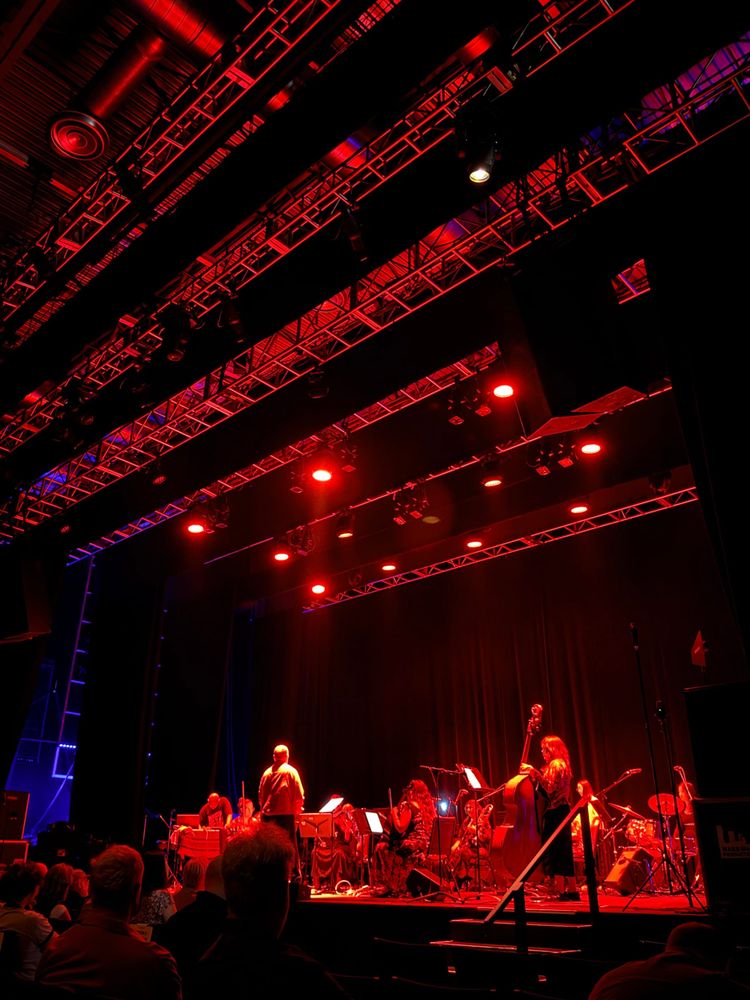
Those days are no more. Attending this past weekend’s Festival of Contemporary Music at the Tanglewood Music Center, I was pleased to find healthy crowds in the house for events at every time of day — Ozawa hall may not have been filled to absolute capacity for every single downbeat, but those who showed up with minutes to spare had to hunt around for seats instead of having their pick of the house. Seldom have I been so happy to be jostled by a throng.
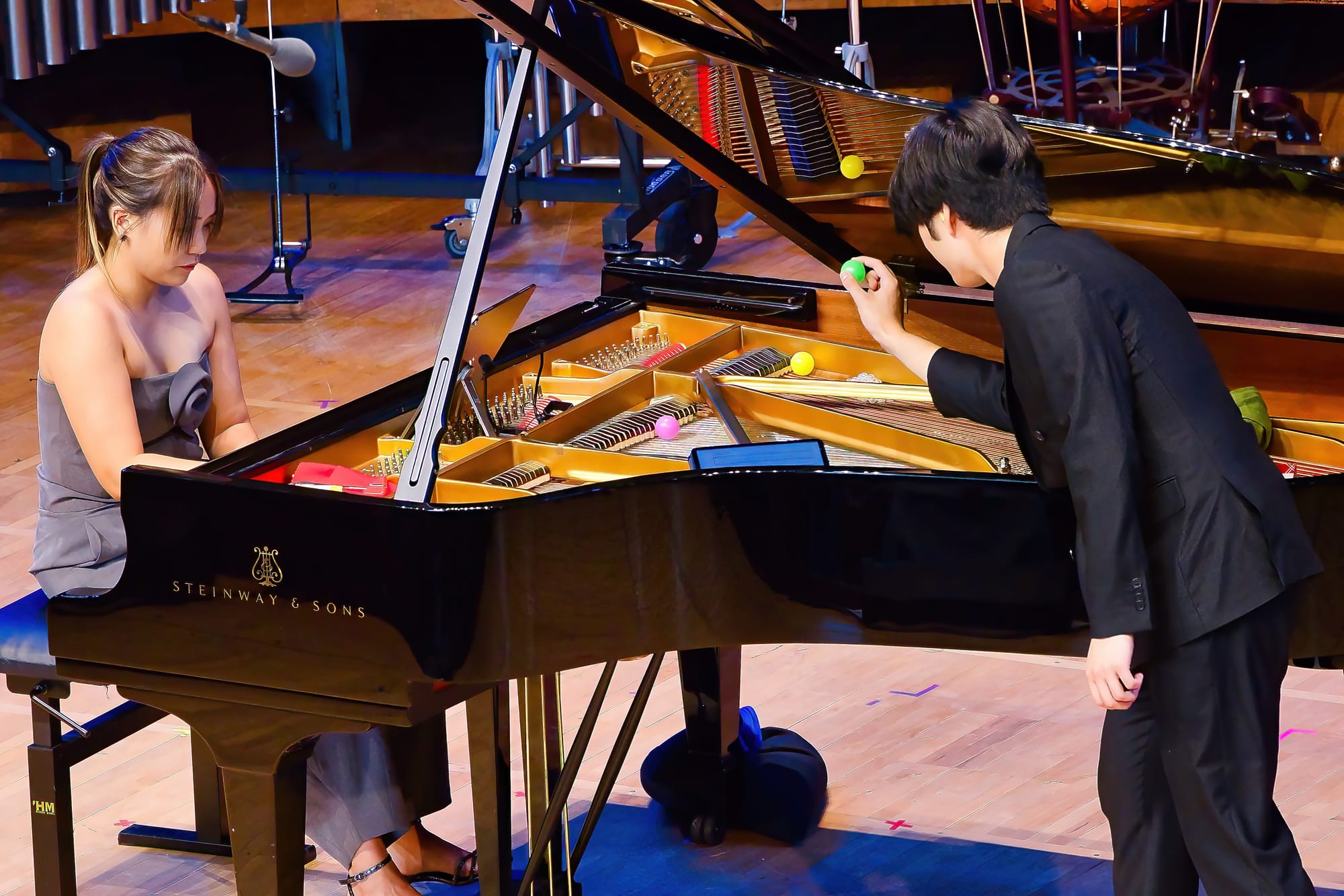
Inevitably for a new music festival, big concepts abounded at the four concerts I was able to attend (I had to miss Thursday’s performance due to a Jewish fast day). Jessie Cox’s Quantify (2017) had a mixed chamber ensemble scattered around the hall unleash an overwhelming wall of turbulent sound that slowly untangled into discernible lines before petering out into isolated notes and then silence as a metaphor for the way that naming things can both make them more knowable and also hem them in suffocatingly. Maya Miro Johnson’s bruises (disambiguation) (2025) had two players attack a piano from every angle — with forearm clusters, with ping-pong balls, with a rubber medical reflex hammer — to dramatize disabilities’ tendency to pit the body and mind against each other. Hers is a theatrical piece that has to be experienced live; the physicality is too central for an audio-only recording to do it justice. That said, its theatrical demands are significant, and the performers for this occasion, Ariel Mo and August Baik, weren’t entirely able to pull it off without slipping into hammy melodrama — though I suspect the list of people with sufficient musical and dramatic chops for this work is not long.
Two works drew on opposite aspects of the natural world to surprisingly similar ends. Delfin Demiray’s 2025 meditation on cosmic awe and terror, as an antidote to fear of death, i eat the stars (whose title comes from a poem by Rebecca Elson), is as distant and astral as its title suggests, but over its ten or so minutes, the six players involved (flute, clarinet, violin, cello, and two percussionists) spin their jagged metallic fragments into a ravishing whirlwind of spectacular cold ecstasy. In Anthozoa (2018) (for violin, cello, percussion, and piano), on the other hand, Gabriella Smith zooms in on tiny little coral polyps to build an acoustic ecosystem that mimics the sounds she heard on field recordings of real-life tropical reefs. This piece, too, swirls its little fragments into rhapsodic ecstasy, here with all the fecund warmth of a rich, shallow sea over a low piano chorale of expansive satiety. Both works assemble a shimmeringly alive world out of minuscule, inorganic building blocks.
This natural inspiration extended to Lisa Streich’s austere 2020 string quartet, Sternenstill (Star-stillness, inspired by the yawning cessation at the onset of the covid pandemic) and Esa-Pekka Salonen’s Fog (2019), a free fantasia on the prelude to JS Bach’s E major partita for solo violin. TMC Fellow Matthew Cone played said prelude directly before Salonen’s work; his interpretation was exactingly regular, which gave it a propulsive forward momentum while simultaneously cutting away the space for yearning that takes with more rubato open up. Still, that regularity made for a smooth transition into Fog, which pins fragments of the prelude in place as a rigid skeleton around which to weave layers of evocative gauze, building to a dense, lush haze before ebbing away like a vivid flower closing its petals with the onset of night. Metrical rigidity wasn’t wholly absent from Streich’s piece either, which kept being interrupted by an unsettling ticking that poked jagged holes in the quiet musical surface.
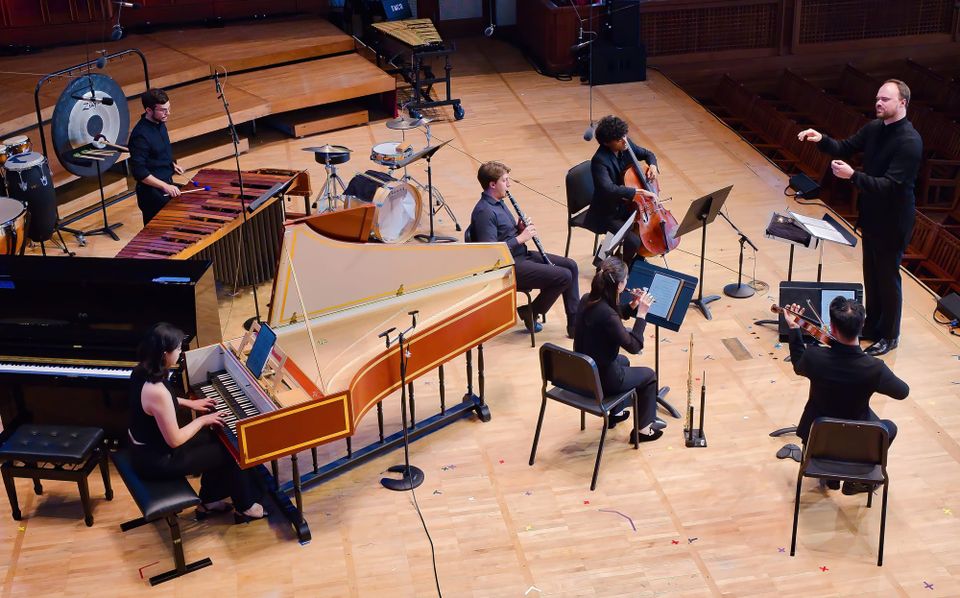
Fog wasn’t the only work to explicitly quote earlier pieces — indeed, there was an entire concert, Friday’s “Meta Music”, built around such compositions. In addition to Fog, that performance included Nico Muhly’s delicate, minimally intrusive orchestration of two William Byrd motets (2007), Peter Maxwell Davies’s riotous fantasia and two pavans after Henry Purcell (1968), and Salonen’s Saltat sorbius (2020) after one of the earliest works of polyphonic music in the European tradition. Anders Hillborg’s Kongsgaard Variations (2006) from Monday’s “Nordic Boomers” concert also belong in this category, being a set of sort-of variations on the theme from the last movement of Beethoven’s final piano sonata. (In his own comments about the variations, Hillborg says that the work “floats aimlessly” in contrast to Beethoven’s “rigorous variations”. Aimless is indeed how I would describe the result: One thing happens, and then another, and some of them — like the analog simulation of a tape played in reverse — are even rather neat, but there’s a listless lack of direction to them, and Hilborg even manages the dubious feat of making Beethoven’s delicate, winsome theme sound schmaltzy and overwritten.)
Scored for three violas, three cellos, three basses, and harp, Saltat sobrius deploys its trio of trios to shimmering, dance-inflected effect, complete with charming interludes where 13th-century plainchant interludes are wheezed out in the highest registers of the first contrabass. Davies takes this dancing energy and runs with it, following a cheekily dissonant fantasia with two music-hall pavans that include everything from a deliberately out-of-tune barroom piano to a moment where the whole pierrot ensemble slows and sags in pitch like a record player that’s suddenly been unplugged. My sense is that this piece was something of a provocation when it premiered, but our era of ecumenical polystylism, it came across as just plain fun, abetted by Ethan Murphy’s enthusiastic grin as he picked up his cello and strummed it across his lap like a guitar.
Cello also featured prominently in the last concert of the festival, which climaxed with Salonen’s sprawling cello concerto from 2016. Originally written for Yo-Yo Ma, the work also features electronic looping effects and, in the third movement, a barn-burning percussion part for bongos and flexatone. The solo part on this occasion was played by Senja Rummukainen, who brought a lithe, intensely vocal tone to the moderate first movement and a breathtaking virtuosity to the breakneck finale even as the orchestra swallowed her sound in some of the busier passages. That evening also included Magnus Lindberg’s arrestingly consonant Serenades (2020) — a moody, lyrical work that sounds a little bit like a golden-age Hollywood soundtrack rumpled up from the washing machine and in need of a good iron — and Hans Abrahamsen’s let me tell you (2013), a setting of excerpts from Paul Griffith’s poem-novel of the same name, which is written using only the words that Ophelia says over the course of Hamlet.
I found Abrahamsen’s work equally perplexing and beguiling. His treatment of the text is brutal: Enormous leaps separate adjacent words, and many individual syllables are interrupted with protracted staccato gasps. It is no mark against Alexandra Henderson that I was often not able to tell what she was singing, even with the printed text directly in front of me. And yet even as individual lines were obliterated, the music caught the animating psychological subtext and built a compelling narrative journey that Henderson brought to emphatic life — if I didn’t always know what she was saying, I always knew exactly what she meant. At the end of the work’s second part, the text lifts in a rhapsody of love — “You have made me like glass—/like glass in which an ecstasy from your light./like glass in which light rained/and rained and rained and goes on,/like glass in which there are showers of light,/light that cannot end.” — and I followed right with Henderson as she ascended, exploding upwards into the emotional heavens while the orchestra seethed in brilliant tumult all about her, a heartrending murmuration of mechanical birds.
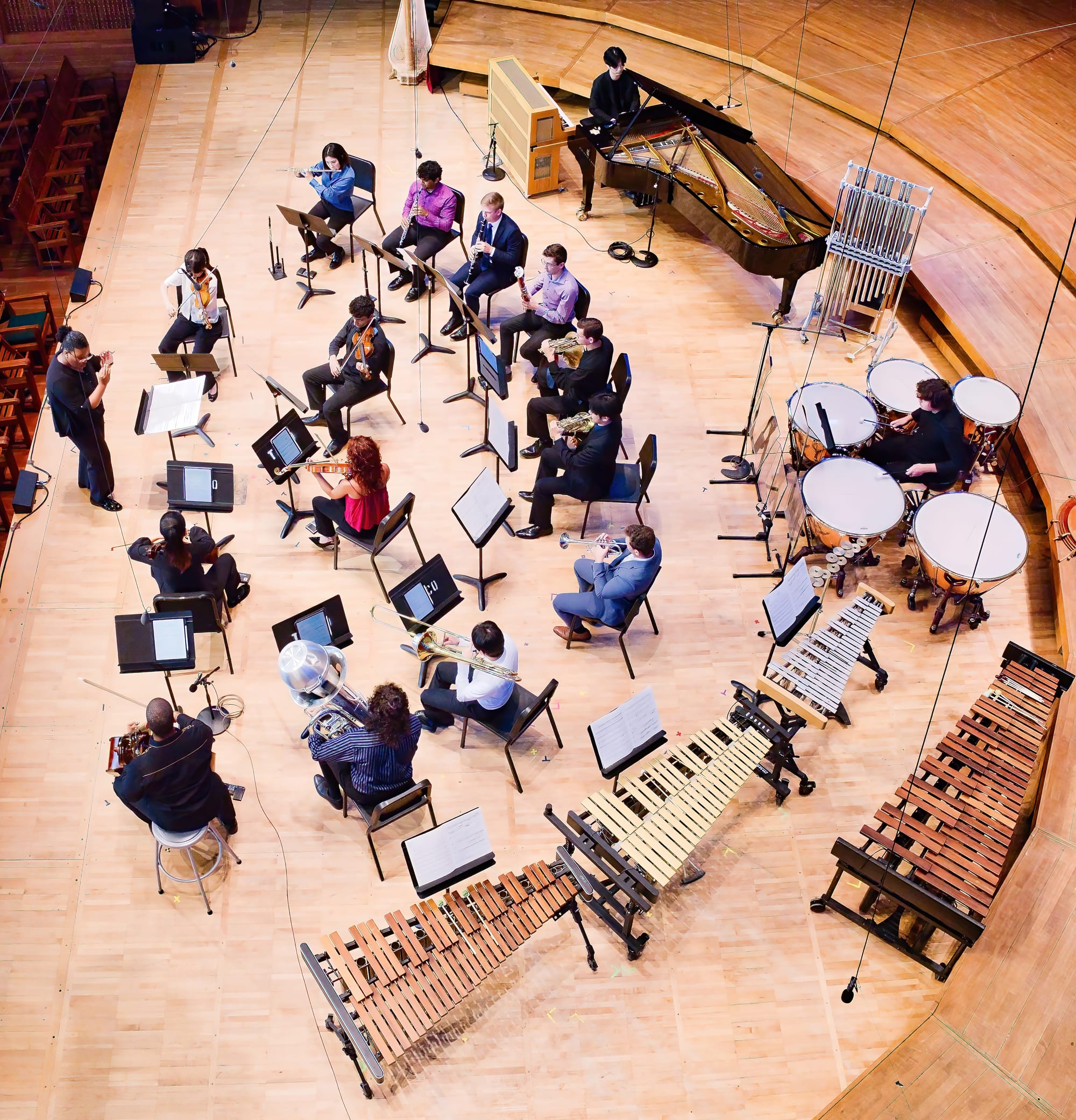
The other big vocal cycle of the festival, Witold Lutosławski’s Chantefleurs et Chantefables (Song-flowers and Song-stories, a setting, from 1990, of nine short surrealist poems by Robert Desnos), was less perplexing, more delightful, and ultimately less successful. It’s full of little gems, ranging from queasy serenades to goofy parodies, but by the end, its alteration between slower flower songs and faster animal ditties started to feel formulaic; each individual song is stronger than the collection as a whole. Rounding out the festival’s set of big works by famous names was Ligeti György’s Melodien (1971). Lauren Smith, conducting the sixteen-person ensemble, brought out Ligeti’s whimsical side, layering up and paring away his burbling textures to reveal moments of delicate, sumptuous repose.
Of course, the size of a work isn’t always proportional to the punch it packs. Alisson Kruusmaa’s Mesmerism (2022) for piano and marimba may have been a spare, cryptic work in no hurry to reveal its secrets, but Anna Berg’s remnants of confetti unexploded (2020) for string quintet radiated a malevolent aura of gnawing, palpable dread — the confetti in its title refers not to the marker of a party or parade but to pamphlets dropped by the US armed forces on Vietnamese villages to warn of impending bombing raids targeting civilian areas. Meanwhile, Hannah Ishizaki’s choreography-inspired piano trio Float/Shake (2023) unleashed a pointillistic barrage that never lost its determined forward propulsion even as its groove began to break down. An expertly proportioned work, in its final moments, a wonder occurs as an island of stability crystallizes out of the skittering tumult. Somehow, in a thicket of inhospitability, Ishizaki builds a home, or at least a temporary shelter where it’s possible to feel safe.
Taking a step back, what can we make of all this? Generalizations are always perilous — even this wealth of music is a tiny sliver of contemporary compositional activity, and necessarily reflects the priorities and preferences of the curators — but even so there were common threads I couldn’t help but note. Almost every piece ended with a slow fade into nothing — of the ones I heard, Chantefleurs was the only full exception, though the Davies deserves an honorable mention. Perhaps this is nothing more than the style of the moment, but I do also wonder whether it’s influenced in the background by the present’s general easygoingness when it comes to stylistic pluralism. There’s a lot to be said for moving past the exclusionary dogmatism of previous generations, but at the festival, I almost got the impression that manifesto-avoidance had bled into an Anagonyeian discomfort with the very prospect of firmly staking out an individual aesthetic ground without undercutting it or somehow backing away. (More than a few works had very satisfying endings and then tacked on a coda that undermined their effectiveness.)
That said, there was refreshingly little reticence around the notion that music can mean things, and quite specific things at that. Overwhelmingly, these works make no pretense of seeking refuge in abstraction or objective distance; they’re largely seeking to express things, whether deeply personal experiences or targeted political agendas. At the same time, the works by the younger composers tended to be quite short, with none of them breaking the fifteen-minute mark. Perhaps that’s an inevitability in a context where the goal is to squeeze in as much new music as possible, but I can’t help but wish that they were given larger canvases to work with. Scale is a tricky thing to master, compositionally, but the only way to really come to terms with it is to dive in and learn by doing; if we want the next generation of composers to add major works to the repertoire, works capable of anchoring a full concert program instead of rounding out a potpourri, we have to give them that space to fill.
Throughout the festival, the performing fellows dispatched these difficult works with finesse and palpable enthusiasm. If these young artists are already so adept at playing contemporary works, I cannot wait to see what the artistic landscape looks like as they bring this experience with them further into their careers.
In his remarks before Friday’s concert, Salonen discussed the experience of being a composer and finding your place in “the big tapestry that we call music history”. The concerts I saw explored many different corners of that tapestry, but what struck me the most was how workaday it all felt: There was no sense of heightened stakes — no feeling that only the “best” or most-likely-to-win-over-a-skeptical-audience works could be programmed, no sense of apology for subjecting listeners to strange and potentially unpleasant sounds. Judging by the energy in the room, these could have been any concerts picked at random from a typical season lineup.
That may sound dull, but I found it profoundly hopeful. If classical music is to continue as a living tradition, it cannot be a fixed mausoleum for a short list of known works from earlier eras. As long as new music is shunted off to the side and treated as an exceptional rarity, I worry that the beating heart of this tradition — musicians using sound to grapple with the complexities of living in our time — will continue to be cut off from the artistic ecosystem that depends on it. Only when new works are part of the everyday hustle and bustle of this scene do I feel optimistic about its future. The tapestry of this art is still being woven; how precious it is to witness its latest threads.
In Brief
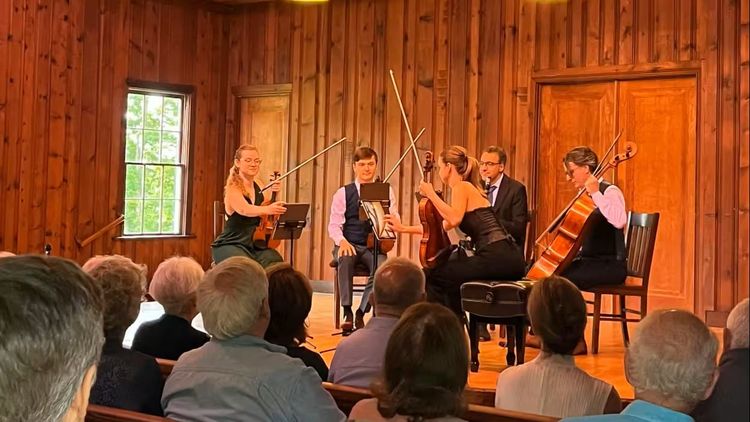
I had a delightful time at the recent Daedalus Quartet performance at Music Mountain. Germaine Tailleferre’s 1919 string quartet was a particular highlight — I’ve often made the argument that French neoclassicism is a fundamentally more pessimistic response to the First World War than serialism, despite how they’re often glossed in program notes, and this work is a strong support for that position: The winsome surface pleasantness is there, to be sure, but perhaps because it was written so shortly after the Great War’s end, that surface cheerfulness is transparently a veneer, and disquiet undercurrents of unresolved despair keep roiling away down below. The Daedalus players brought a conversational energy to the whole program, suggesting a long evening of close friends ranging across the whole gambit of human experience with freewheeling intimacy.
In My Calendar
Summer festival season marches on! As ever, these listings aren’t comprehensive, they’re just the ones that happen to have caught my eye and that I have particular interest in. If you’re a local artist, publicist, or presenting institution, please add me to your mailing list so I can keep up to date on what you have going on!
Events marked with a Ø are free and open to the public.
- until Aug 5, various times: Not exactly classical music narrowly construed, but Hadestown is a gorgeous show that few other musicals sound like, and it currently has a proshoot playing in movie theaters around the country. There are plenty of showtimes at the Hadley and West Springfield Cinemarks, and probably other theaters that may be more convenient for you!
- July 30–Aug 1, various times: If one contemporary music festival isn’t enough for you, you don’t have to wait long for more: This coming weekend, Bang on a Can takes over Mass MoCA for their annual LOUD weekend. Expect a rather more rock-inflected slant than Tanglewood’s offerings, but with enough variety crammed in to keep everybody happy.
- July 31, 7:30pm: The Yellow Barn Music Festival has been going strong for some weeks already, but this Friday show features a contemporary timpani work alongside a trailblazing minimalist and a Howl–inspired string quartet. Here’s hoping they don’t get expelled from the academy for publishing obscene odes on the windows of the skull... (This concert is Pay What You Can.)
- August 1–8, various times: Helena Tulve is in residence at Yellow Barn for a week-long series of concerts pairing her works (including several premieres) with everything from high classical staples to infamous modernist provocations and much else besides. If you have to pick only one, Thursday’s offering has a great deal going for it — brace yourself at the end for air from another planet. (Some of these concerts are free, the rest are Pay What You Can.)
- Ø August 1, 4:00pm: If you’re not feeling the prospect of marathoning new works in the post-industrial bowels of a contemporary art museum, consider heading northwest for Monadnock Music’s lineup of three string quartets by living composers including Peterborough resident Molly Herron. From the lineup and the publicity notes, I expect the experience to be brief but intense.
- August 1, 6:00pm: If you already have tickets to the evening’s performance of The Marriage of Figaro, I encourage you to show up early to Tanglewood to catch the prelude performance of Messiaen’s Quartet for the end of Time. Between its hair-raising unison helter-skelter dances and its expansive meditations on eternity, it’s a classic for a reason.
- August 1 and 2, 8:00pm/2:30pm: The second weekend of the Marlboro music festival is slated to include Bartók Béla’s sinuous, spitfire Contrasts and a surreal fairytale suite by Jörg Widmann. The Sunday show is already sold out, but the Saturday show still has some availability . . . for now. Act fast if you want to attend!
- August 2, 3:00pm: Music Mountain presents the first part of their clarinet quintet series, featuring the world premiere of a new work by Alfonso Fuentes. There will be two more concerts in the series later this summer, which is a nice way to tie the weeks together.
- August 6, 7:30pm: Up in Vermont, the Manchester Music Festival presents an evening of works old and new that draw on Jazz as well as classical traditions. Some of them are dreamy, some are propulsive, and some are completely unknown to me!
- August 7–9, various times: The Marlboro music festival continues. The programs for this weekend haven’t been announced yet, but the Sunday show is already sold out; whatever they reveal they’ll be playing, it’s sure to be worth the leap into the unknown.
- August 8, 2:00pm: As part of their series exploring America’s 250th, Tanglewood presents contemporary music superstar Claire Chase performing Marcos Balter’s Pan. Chase is a musician of boundless virtuosity and expressive depth; a concert-length solo appearance from her is sure to be a tour de force.
- August 9, 2:30pm: Yo-Yo Ma hardly needs any introduction from me — once you’ve been celebrity stunt-cast in a Knives Out movie, where even is there to go? In Ma’s case, the answer is back to Tanglewood for a warmly multicultural concert that features the Boston University Tanglewood Institute’s chorus alongside numerous globe-trotting soloists.
- August 9, 3:00pm: The Harlem Quartet comes to Music Mountain for a program that pairs warhorses of the repertoire with newer works and forgotten treasures. No clarinet this time, but don’t let that stop you!
- August 10, 8:00pm: The Tanglewood Music Center presents an evening of American opera arias and scenes. We’ve got anticapitalist fables, we’ve got memoirs of Black queerness, we’ve got this year’s Pulitzer Prize winner — what more could anyone ask?
Member discussion