Up All Night (to Get Jesus)

Before anything else, a big congratulations to all those who graduated this past weekend from one of our local colleges! I’m sure you’re all properly exhausted from the pomp and circumstance by this point, but let me be one more small voice joining the crowd of those applauding you.
In review: Illumine Vocal Arts Ensemble
Years ago, I read a commentary by a Deaf Jew explaining that even with ASL interpretation, they had a hard time staying engaged with Shabbat services because all the texts are so similar — without all the different tunes sung by hearing Jews, the whole service blurred into a wash of generic praise and gratitude. This is, in fact, one of the central challenges of religious music: Given the relatively narrow emotional range of most liturgical texts, how do you compose engagingly varied music while still supporting the lyrics’ meaning?
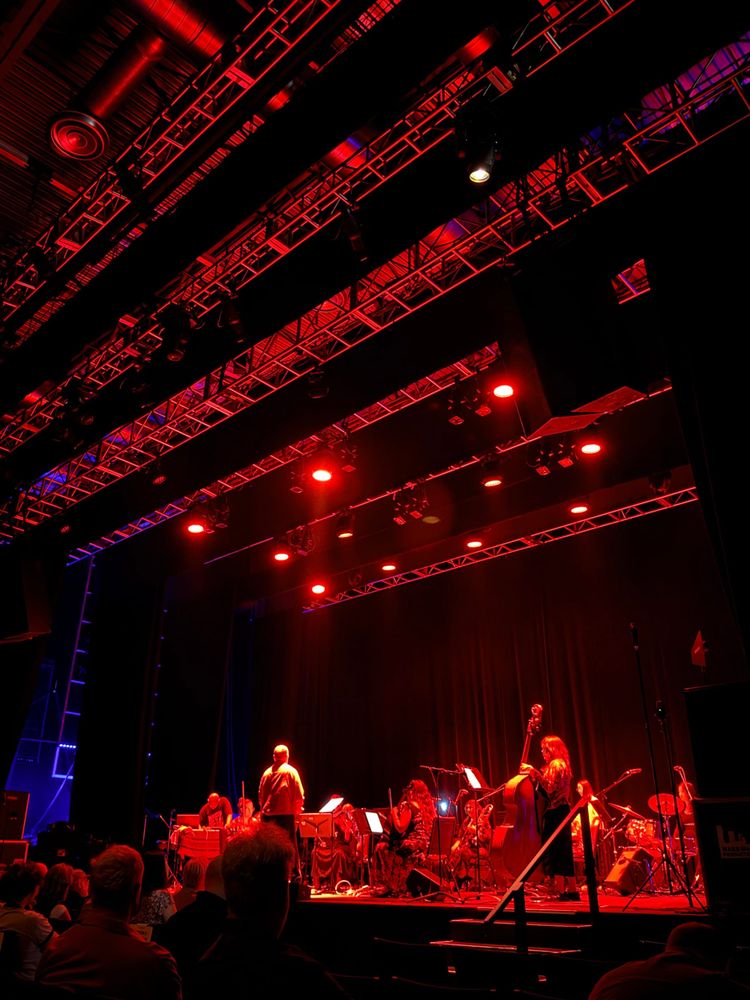
It was a challenge largely met by the works that the Illumine Vocal Arts Ensemble sang on Sunday at St Brigid’s parish in Amherst, with guest basso profundo Glenn Miller. In addition to Sergei Rachmaninov’s monumental All-Night Vigil (1915), the chorus took advantage of Miller’s presence to offer two works by Pavel Chesnokov that also feature his ultra-low range.
The two Chesnokov works — “Salvation Is Created” (1912) and “Do Not Reject Me” (1914) — opened the concert, and came close to blurring into a generic wash. Both are finely crafted, exemplars of their genre — a style marked by long, undulating phrases; chorale-like rhythmic unisons; and a preponderance of minor chords — but even a few hours later I struggle to recall any of their specific musical materials. Miller and Illumine sang exquisitely, but if these pieces have been under-performed because of the dearth of ultra-low basses, it’s hard for me to feel that concert life is that much poorer for it.
The Rachmaninov is another story. The fundamental building blocks are all the same, but there’s an alive-ness to the All-Night Vigil that keeps the whole thing fresh. I’ve heard people say there isn’t much Rachmaninov in the Vigil; it may not have the pyrotechnics of his piano concerti, but the variety he pulls out of this slight palette testifies to his compositional skill. There are moments, too, like the “Six Psalms” setting where Romantic harmonies glint through, like a hidden pattern in a stained-glass window revealed by sunlight. The result is a profound, unbearably gentle consolation.
An urgent personal matter unfortunately pulled me away at intermission, but Illumine’s singing in the first half was consistently excellent. Their blend is seamless across the entire gamut of dynamics; they could swell slowly across the duration of an expansive phrase like a massive wave cresting near the shore, and they could also hover delicately before bursting into sudden life. St Brigid’s is an echoey space that tends to obliterate text; that I could catch as many of the words as I did speaks to the crispness of their diction. They are gearing up to announce their next season in the coming weeks; keep your eye out for it and go hear them if you possibly can.
In Brief
Gabriela Lena Frank won this year’s Pulitzer Prize for music. As far as I can tell, there’s no publicly available recording of the recent premiere of Picaflor: A Future Myth, her winning work, but I suspect that will be rectified soon enough. In the meantime, plenty of her other works have been committed to tape. If you want to get a sense of her style, you could do worse than starting with the sampler of her chamber music that Naxos released in 2011. From the intoxicated dances of Hilos to the severe angularity of Adagio para Amantaní, there’s a whole world of emotional landscapes on offer here, and I can only imagine how Frank deploys these resources in service of Picaflor’s story of environmental destruction and determined survival.
I am too close personally and professionally to too many people — composers and performers both! — involved with Bandwidth to give Where Songs Go at Night, their new-to-me release from the early years of the pandemic, a formal review, but I’ve been enjoying listening to it as I go about my days recently, and perhaps you might, too. I don’t think it’s a deliberate reference, but the title track (by Anna Weesner, who I do not know in any capacity) puts me oddly in mind of Igor Stravinskii’s setting of the “Lyke Wake Dirge” (which I find ultimately less compelling than Benjamin Britten’s unbeatable treatment of it in the heart of his Serenade for tenor, horn, and strings). Either way, the album is a collection of evocative works. Take a listen and see what connections jump out for you!
In My Calendar
We’re in a bit of a lull right now between the end of the spring semester and the start of summer festival season. Even so, this set of listings is not comprehensive; it’s just what happens to be on my radar that I’m particularly excited about. If you are a performer, presenter, or publicist in the local classical music scene, please add me to your mailing list so I can keep an eye out for your offerings!
Entries marked with a ∅ are free and do not require advance registration.
- Ø May 20, 5:00pm: The Drake in downtown Amherst hosts an album release party for Eric Sawyer’s new album. Sawyer is a local opera composer who’s written a number of shows that have been done in the area, especially in partnership with educational institutions. The release party will feature some live performances, presumably of excerpts of works from the album. (The event is free, but it looks like they’re collecting reservations in advance.)
- May 28, 7:00pm: The Victory Players[1] come to MIFA in Holyoke for an evening of premieres. It’s not entirely clear whether there are going to be some already-premiered works on the bill as well, but if so, it sounds like they’ll still be fairly hot off the press — don’t expect to hear things you’ve heard before!
- May 30, 1:00pm: El Último Sueño de Frida y Diego, the new opera by Gabriela Lena Frank and Nilo Cruz, will be broadcast live in HD from the Metropolitan Opera in NYC to local movie theaters around the country. Frank’s Pulitzer win is well timed to give this one an extra boost, but new operas face an uphill climb to make their way into the repertoire, so you may not get another chance to see this one for quite some time.
Obligatory disclosure: I have a collegial professional relationship with their clarinettist, and I also submitted to a recent call for scores from them. ↩︎
Member discussion